Saturday, March 24, 2007

THE LITTLE WHITE WINGED GOSPEL CHURCH

Whoop-whoop! Hallelujah Flock, Can I get a big Amen?

AAAAAMEEENNNN!!!!!!


Now I wancha’ all turnin’ with me in The Book to First Balonians Chapter 12, verse 1 and read along.


And it came to pass that there was this here school bus driver that had passed on and was entering into life eternal. At the Pearly Gates he was greeted by Saint Peter himself and the great Saint presented him with lovely gifts. The kind of gifts that could not be had on the Home Shopping Network or QVC. The School Bus Driver was given a set of molting angel wings and a bent-up halo and an out-of-tune harp that was a Pacific-Rim knock-off of a brand name harp.


Well the School Bus Driver was disappointed with the gifts bestowed upon him, but was glad that he made it to his Reward Eternal. He spent his days walking up and down the streets of gold, flappin’ his wings and pluckin’ his out of tune harp.


Then one day he spotted someone familiar lookin’. Yessir, the fellow he saw was wearin’ a brand new set of the finest wings you ever saw. He had on a solid gold Stetson halo and had a 12 string harp with a maple neck and a sunburst body specially made by the custom shop of Fender guitars of Corona California. And he recognized this fellow to be the nastiest, meanest, worst school bus driver. I mean he was not just a bad man, but a bad driver as well.

So our School Bus Driver went directly to those Pearly Gates and demanded to see Saint Peter.

“Saint Peter,” said the School Bus Driver, “All my life I obeyed the traffic laws. I was cautious in driving the little children hither and yon. And I was the epitome of courtesy to all. And what do I get? I get a lousy set of molting wings, a bent up halo and a harp made in Indonesia that won’t even stay in tune. And that Bad School bus driver over there was mean to everyone and drove his bus like a mad man. Yet he gets a brand new solid gold Stetson halo, a brand new set of wings and a custom made Fender 12 string harp. It ain’t fair I tell you!”


“My son, my son,” says Saint Peter in a thick Italian accent.

“Yes you were courteous and a wonderful driver and you were welcomed into Life Eternal.

But this man, the nasty School Bus Driver, I tell you because of the way he scared all of the little children by his terrible driving and bad attitude, because of this, everyday they all turned to God and prayed Oh Lord protect me and deliver me to Your Kingdom. Therefore this man turned more souls to God than you ever did and he has been justly rewarded.”


Thus ends today’s readin’ Flock. I wancha’ now all standin’ and turnin’ in your hymnals to page 125 as we sing...


Wednesday, March 21, 2007

STEALTH

In this day and age we have overcome many obstacles of the past and are able to be virtually undected. Witness the Stealth fighter plane and the Stealth bomber. Both can fly over an enemy country unnoticed by radar or the naked eye and hit their target and escape without being seen.


Or military has trained snipers to dress in camoflage suits, strike their target and slip off as if they were invisible.


We can see more day to day methods of the American public displaying stealth. May I present these examples.


This man standing inocently in front of his trailer is busy fileting his catch of fish on a bright sunny day.

Only the trained scientific eye can tell he is drinking beer. Until now this has never been revealed, but a simple brown paper bag has secret properties that make beer virtually invisible to the police and wives. I'll bet you never knew that.


Of course this young lady's crib notes make it virtually impossible for the proctor to determine that she is cheating based on the fact that he is busy leering at her tasty morsels.


The car on the far right is virtually undetectable as it runs through a red light. This is due to the stealth attachments the owner has purchased from the back pages of an automotive magazine.


Not even my own trained eye can detect that this fellow doesn't have a hair on his head. Yep, he's got a rug on his noggin! That is true stealth.


And here's another fellow displaying more of the stealth that has made mankind great.
I cannot tell he is balding. Can you?


And let's not leave out the ladies. The first thing you notice about this beautiful young lady is her incredibly big brown eyes. That is because her eye's are distracting you from what is not covered. Uh' you are looking at her eyes, aren't you?


And of course here is a couple of photos that prove that the fair sex has stealth down to an art.


This famous Country music star has transformed herself from this...


...to this.


That is stealth at it's best!

Sunday, March 11, 2007

Big Tom Rivers

In last weeks local news I read that my favorite radio entertainer, Gary Burbank, was retiring at the end of the year.

Gary is now 66 and has been in radio most of his life. I don't get to listen to him as much as I used to. I'll sure miss him and his unique sense of humor and look at the world.

The next day the newspaper ran an article asking readers to pick someone that they would like to take Gary's place. I don't think this can be accomplished, but it did get me to think back to one of my favorite personalities that made a brief mark on radio in my fair city.

Big Tom Rivers landed a morning drive time job on one of the FM stations. It was a pleasure to listen to him for a few hours every morning. He was hilarious. Tom would announce the call letters by saying, "This is Big Tom Rivers your morning man on WGGR FM. I'm playin' the hits while you're sprayin' your pits."

One of Rivers' bits was The Shaving Cream Weather Report. He would ask his listeners to spray shaving cream on their bathroom mirror and follow along with him. He would have a squirting noise and another squeaking sound like he was drawing the weather map with his finger on a lathered up glass mirror.


One morning he announced that he was going to read a story called The Princess and The Pee. He rambled on about this young lady that was sure she was a princess so she traveled to the nearest castle to prove her royalty to everyone. The wizard told her the only way to do this was to spend the night on a mattress that was piled up on 10 other mattresses. She needed to take a pee on the very bottom mattress. If she woke up the next morning and could feel the pee, that was proof that she was a princess. He must have gone on for 10 minutes about the princess sleeping on the matteress that she took a pee on. Rivers was not on the air the next morning.

In searching for him I learned that he had passed away a few years ago. Big Tom was a funny man.

Wednesday, March 07, 2007

EUPHEMISMS FOR THE MODERN AGE

In my tireless quest to stay abreast of constantly changing, evolving colloquial buzzwords, I offer this. Hopefully through their use, you too, can stay on the "cutting edge" of what is hip!


1. BLAMESTORMING: Sitting around in a group, discussing why a deadline was missed or a project failed, and who was responsible.


2. SEAGULL MANAGER: A manager, who flies in, makes a lot of noise, craps on everything, and then leaves.

3. ASSMOSIS: The process by which some people seem to absorb success and advancement by kissing up to the boss rather than working hard.


4.SALMON DAY: The experience of spending an entire day swimming upstream only to get screwed and die in the end.


5.CUBE FARM : An office filled with cubicles.


6.PRAIRIE DOGGING: When someone yells or drops something loudly in a cube farm, and people's heads pop up over the walls to see what's going on.


7.MOUSE POTATO: The on-line, wired generation's answer to the couch potato.


8.SITCOM's: Single Income, Two Children, Oppressive Mortgage. What Yuppies get into when they have children and one of them stops working to stay home with the kids.


9.STRESS PUPPY: A person who seems to thrive on being stressed out and whiny.


10. SWIPEOUT: An ATM or credit card that has been rendered useless because magnetic strip is worn away from extensive use.


11.XEROX SUBSIDY: Euphemism for swiping free photocopies from one's workplace.


12. IRRITAINMENT: find yourself unable to stop watching *whatever*


13. PERCUSSIVE MAINTENANCE:The fine art of whacking the crap out of an electronic device to get it to work again.


14. ADMINISPHERE: The rarefied organizational layers beginning just above the rank and file. Decisions that fall from the adminisphere are often profoundly inappropriate or irrelevant to the problems they were designed to solve.


15. 404: Someone who's clueless. From the World Wide Web error Message "404 Not Found," meaning that the requested site could not be located.


16. GENERICA: Features of the American landscape that are exactly the same no matter where one is, such as fast food joints, strip malls, and subdivisions.


17.OHNOSECOND: That minuscule fraction of time in which you realize that you've just made a BIG mistake (Like after hitting send on an email by mistake).


18.WOOF's: Well-Off Older Folks.


19.CROP DUSTING: Surreptitiously passing gas while passing through a Cube Farm.

~and last but not least~


20. MAWG: Middle age white guy *tryin' to play the blues*

Tuesday, March 06, 2007

Puzzling Web Addresses


These all left me shaking my head.

All of these are legitimate companies that didn't spend quite >>enough time considering how their online names might appear ... and be misread.

These are not made up. Check them out yourself!


1. Who Represents is where you can find the name of the agent that represents any celebrity. Their Web site is
www.whorepresents.com


2 . Experts Exchange is a knowledge base where programmers can exchange advice and views at
www.expertsexchange.com


3. Looking for a pen? Look no further than Pen Island at
www.penisland.net


4. Need a therapist? Try Therapist Finder at www.therapistfinder.com

5. There's the Italian Power Generator company,
www.powergenitalia.com


6. And don't forget the Mole Station Native Nursery in New South Wales
www.molestationnursery.com


7. If you're looking for IP computer software, there's always www.ipanywhere.com


8. The First Cumming Methodist Church Web site is www.cummingfirst.com


9. And the designers at Speed of Art await you at their wacky Web site, www.speedofart.com

Friday, February 23, 2007

That's The Way, Of The World


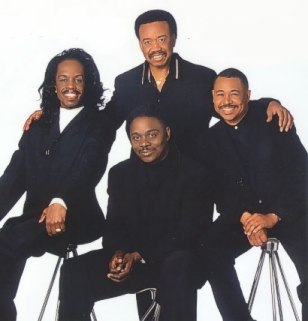
The music group from the 1980's, Earth, Wind And Fire calls this song their National Anthem. I'll go along with that. The words are...like we used to say...Right On.


This song was written by Maurice White, Charles Stepney & Verdine White. Maurice was the lead singer, leader and founder of Earth, Wind and Fire. Philip Bailey was the other lead singer and sang the falsetto parts.


I especially love simple songs like this. They are so pure and brief, yet say so much. Read the lyrics and think about them before you listen to the song.


Hearts of fire creates love desire.
Take you high and higher to the world you belong.
Hearts of fire creates love desire.
High and higher to your place on the throne.

We’ve come together on this special day
To sing our message loud and clear
Looking back we’ve touched on sorrowful days
Future pass, they disappear

You will find peace of mind
If you look way down in your heart and soul
Don’t hesitate ‘cause the world seems cold
Stay young at heart ‘cause you’re never (never, never, ..) old at heart


That’s the way of the world
Plant your flower and you grow a pearl
A child is born with a heart of gold
The way of the world makes his heart grow cold

http://www.youtube.com/watch?v=aV2rb7fPBVM

Tuesday, February 20, 2007

Mr. Scoutmaster & Boy Scout Troop 55

When I was a very young boy I played clarinet in the Boy Scout Band. This was a band organized by the head of the local Army band, Lloyd Maddox. He teamed up with another well-known 1940's local bandleader, Deke Moffit who wrote arrangements of some of our songs. The pinacle of the year was to play at the Boy Scout Jamboree that was held each year at the Cincinnati Gardens.

We may have thought we were the stars of the show until Scout Troop 55 was called on. These fellas put on an exhibition of precision marching that was unmatched.

I had all but forgotten about the Boy Scout Jamboree until I read the online edition of today's Cincinnati Enquirer

This is the Cincinnati Enquirer article is by Chuck Martin and photos by Michael Keating


There may never be another group of Boy Scouts like those of Cincinnati's Troop 55. Maybe never another leader like the man they called "Scoutmaster."

Headquartered in the old Ninth Street YMCA in the West End, Troop 55 was a second home for many in the neighborhood during the first half of the last century. There, they learned to swim and operate amateur radios, to march tightly in step. On field trips out of the city, they hiked and camped, cooked and played.

It didn't matter that these scouts were all African-Americans, some so poor they couldn't afford uniforms. It didn't matter that in order to get to their black-only summer camp, they had to take a streetcar or bus as far east as it ran - to Madisonville - then march another 20 miles to Camp Symmes, near Milford.
Troop 55 was one of several area segregated Boy Scout troops. But that didn't diminish the members' goals or limit their accomplishments. Perhaps it emboldened them.

When Troop 55 formed in 1919, Ted Berry - Cincinnati's first African-American mayor -was a member. He would later serve as an assistant scoutmaster. The scouts of Troop 55 patrolled the streets and back alleys on bicycles, running errands for the elderly and shut-ins, asking for no pay or tips.

"We were like guardian angels," says Herman Turner, 79, an Eagle Scout, who would later fly an Air Force bomber in Korea and serve as a teacher and administrator in Cincinnati Public Schools.

In boats, the scouts helped search for survivors after the great Cincinnati flood of 1937. For air raid drills during World War II, they pedaled around their neighborhood turning off city lights.

At the Ninth Street Y between Mound and Cutter streets, then the center of the West End community, the scouts learned discipline, respect and hard work. The man who taught them these values, Leo J. Hopkins, is behind the legend of Troop 55.

"He was a man among men," says Bill Means, 77, a Troop 55 scout and former Golden Gloves boxing champion.

Most knew him only as "Scoutmaster," an African-American whom boys saluted - in or out of uniform - wherever they saw him. He was smaller than many of his scouts, standing no taller than 5-foot-3, weighing no more than 130 pounds.

Yet he earned their respect by example - teaching the boys to tie knots, use a knife and start a fire without matches. And in his weekly meetings, Hopkins demanded attention with his booming voice, the bang of a wooden gavel and sometimes, the toss of a drum stick across the room.

He lived at the Ninth Street Y and had no family except for the boys of Troop 55, who loved him like a father.

"His life was scouting, his life was the boys," says Lynwood Battle Jr., 64, another Troop 55 scout and former Procter & Gamble executive.

Hopkins taught the scouts to beat a drum, blow a horn and march proudly. Many still remember the adoring crowds that would follow Troop 55 in parades from the West End to Fountain Square during the 1930s, '40s and '50s. All the boys in the neighborhood wanted to join the troop.

William Mundon grew up across the street from the Y, hearing the drum and bugle corps practice every Friday "lighting up the neighborhood." He wanted to join so badly, he lied about his age.

"I went to join when I was two months away from my 12th birthday," says Mundon, 82, who served in the Navy during World War II. "But when Scoutmaster heard that, he banged his mallet on the desk and told me I had to be 12 to join."

The troop's bicycle brigade would shut down streets as the marching band of boys in starched green shirts approached. A drum major led the drum and bugle corps, followed by more scouts on foot and those on bicycles, their wheel spokes decorated for the occasion.

And somewhere on the street nearby, Hopkins rode his bike, watching to make sure everyone was in line and in step. Watching proudly.

Monday, February 19, 2007

John Frum

The John Frum Movement is perhaps the world’s most unusual religion. It is also a sad note on the Christian missionary style of the nineteenth century.

South Pacific villagers worship a mysterious American they call John Frum - believing he'll one day shower their remote island with riches.

In the morning heat on a tropical island halfway across the world from the United States, several dark-skinned men—clad in what look to be U.S. Army uniforms—appear on a mound overlooking a bamboo-hut village. One reverently carries Old Glory, precisely folded to reveal only the stars. On the command of a bearded “drill sergeant,” the flag is raised on a pole hacked from a tall tree trunk. As the huge banner billows in the wind, hundreds of watching villagers clap and cheer.

Chief Isaac Wan, a slight, bearded man in a blue suit and ceremonial sash, leads the uniformed men down to open ground in the middle of the village. Some 40 barefoot "G.I.’s" suddenly emerge from behind the huts to more cheering, marching in perfect step and ranks of two past Chief Isaac. They tote bamboo “rifles” on their shoulders, the scarlet tips sharpened to represent bloody bayonets, and sport the letters “USA,” painted in red on their bare chests and backs.


This is February 15, John Frum Day, on the remote island of Tanna in the South Pacific nation of Vanuatu. On this holiest of days, devotees have descended on the village of Lamakara from all over the island to honor a ghostly American messiah, John Frum. “John promised he’ll bring planeloads and shiploads of cargo to us from America if we pray to him,” a village elder tells me as he salutes the Stars and Stripes. “Radios, TVs, trucks, boats, watches, iceboxes, medicine, Coca-Cola and many other wonderful things.”

They are of course speaking in Pidgin English of their mythical messiah, John frum America.

There are a group of South Sea island’s known as Vanuatu. One of these was featured on the TV show Survivor. They lay between Fiji and New Guinea. Tanna is one of the 80 islands that comprise Vanuatu. Like some of the other islands in the chain, it has an active volcano. Tanna is populated with about 28,000 people. They call their god “Yasur”. They believe that their American messiah lives within the volcano.

The inhabitants imbibe in a drink made from a species of pepper plant called kava. Tanna is said to produce the strongest kava. This beverage has narcotic and perhaps hallucinogenic qualities. The local men consume vast quantities of the drink.

For as long as Tanna’s inhabitants can remember, island men have downed kava at sunset each day in a place off-limits to women. Christian missionaries, mostly Presbyterians from Scotland, put a temporary stop to the practice in the early 20th century, also banning other traditional practices, or “kastom,” that locals had followed faithfully for millennia: dancing, penis wrapping and polygamy. The missionaries also forbade working and amusement on Sundays, swearing and adultery. In the absence of a strong colonial administrative presence, they set up their own courts to punish miscreants, sentencing them to forced labor. The Tannese seethed under the missionaries’ rules for three decades. Then, John Frum appeared.


The local leaders say that John Frum first appeared one night in the late 1930s, after a group of elders had downed many shells of kava as a prelude to receiving messages from the spirit world. “He was a white man who spoke our language, but he didn’t tell us then he was an American,” says Chief Kahuwya, leader of Yakel village. John Frum told them he had come to rescue them from the missionaries and colonial officials. “John told us that all Tanna’s people should stop following the white man’s ways,” Chief Kahuwya says. “He said we should throw away their money and clothes, take our children from their schools, stop going to church and go back to living as kastom people. We should drink kava, worship the magic stones and perform our ritual dances.”

Perhaps the chieftains in their kava reveries actually experienced a spontaneous vision of John Frum. Or perhaps the apparition has more practical roots. It’s possible that local leaders conceived of John Frum as a powerful white-skinned ally in the fight against the colonials, who were attempting to crush much of the islanders’ culture and prod them into Christianity. In fact, that view of the origins of the cult gained credence in 1949, when the island administrator, Alexander Rentoul, noting that “frum” is the Tannese pronunciation of “broom,” wrote that the object of the John Frum movement “was to sweep (or broom) the white people off the island of Tanna.”

Whatever the truth, John Frum’s message struck a chord. Villagers on Tanna began throwing their money into the sea and killing their pigs for grand feasts to welcome their new messiah. Colonial authorities eventually struck back, arresting the movement’s leaders—including Chief Isaac’s father, Chief Nikiau. They were shipped to a prison at Port-Vila in 1941, their subsequent years behind bars earning them status as the John Frum movement’s first martyrs.
The cult got its biggest boost the following year, when American troops by the thousands were dispatched to the New Hebrides, where they built large military bases at Port-Vila and on the island of Espíritu Santo. The bases included hospitals, airstrips, jetties, roads, bridges and corrugated-steel Quonset huts, many erected with the help of more than a thousand men recruited as laborers from Tanna and other parts of the New Hebrides—among them Chief Kahuwya.

Where the U.S. armed forces go, so go the legendary PXs, with their seemingly endless supply of chocolate, cigarettes and Coca-Cola. For men who lived in huts and farmed yams, the Americans’ wealth was a revelation. The troops paid them 25 cents a day for their work and handed out generous amounts of goodies.

The Americans’ munificence dazzled the men from Tanna, as did the sight of dark-skinned soldiers eating the same food, wearing the same clothes, living in similar huts and tents and operating the same high-tech equipment as white soldiers. “In kastom, people sit together to eat,” says Kirk Huffman, who was the curator of Vanuatu’s cultural center during his years in the island nation. “The missionaries had angered the Tannese by always eating separately.”

It seems this is when the legend of John Frum took on a decidedly American character. “John Frum appeared to us in Port-Vila,” Chief Kahuwya says, “and stayed with us throughout the war. John was dressed in all white, like American Navy men, and it was then we knew John was an American. John said that when the war was over, he’d come to us in Tanna with ships and planes bringing much cargo, like the Americans had in Vila.”

In 1943, the U.S. command, concerned about the movement’s growth, sent the USS Echo to Tanna with Maj. Samuel Patten on board. His mission was to convince John Frum followers that, as his report put it, “the American forces had no connection with Jonfrum.” He failed. At war’s end, the U.S. military unwittingly enhanced the legend of their endless supply of cargo when they bulldozed tons of equipment—trucks, jeeps, aircraft engines, supplies—off the coast of Espíritu Santo. During six decades in the shallows, coral and sand have obscured much of the watery grave of war surplus, but snorkelers can still see tires, bulldozers and even full Coke bottles. The locals wryly named the place Million Dollar Point.


After the war, when they returned home from Port-Vila to their huts, the Tanna men were convinced that John Frum would soon join them, and hacked a primitive airstrip out of the jungle in the island’s north to tempt the expected American planes from the skies. Across the South Pacific, thousands of other cargo cult followers began devising similar plans—even building bamboo control towers strung with rope and bamboo aerials to guide in the planes.

In 1964, one cargo cult on New Hanover Island in Papua New Guinea offered the U.S. government $1,000 for Lyndon Johnson to come and be their paramount chief. But as the years passed with empty skies and seas, almost all the cargo cults disappeared, the devotees’ hopes crushed.

At Sulphur Bay the faithful never wavered. Each Friday afternoon, hundreds of believers stream across the ash plain below Yasur, coming to Lamaraka from villages all over Tanna. After the sun goes down and the men have drunk kava, the congregation gathers in and around an open hut on the ceremonial ground. As light from kerosene lamps flickers across their faces, they strum guitars and homemade ukuleles, singing hymns of John Frum’s prophecies and the struggles of the cult’s martyrs. Many carry the same plea: “We’re waiting in our village for you, John. When are you coming with all the cargo you promised us?”

Threaded among the singers’ perfect harmonies is a high-pitched Melanesian keening that hones each hymn with a yearning edge. I look around in vain for Chief Isaac until a senior man in the cult whispers that after drinking kava, Isaac has disappeared among the darkened trees to talk to John Frum. The weekly service doesn’t end until the sun comes back up, at seven the next morning.


The John From Movement (with a variation on spelling) has also sprung up in Australia and New Zealand as a charitable organization with the aim of making improvements to life in Vanuatu such as water purification and solar power to generate electricity

Much of the text was from the Smithsonian Magazine and written and photographed by Paul Raffaele