Tuesday, January 16, 2007

It's Girl Scout Cookie Time And It Appears There May Be A Mafia Connection

This just in from Peggy Kreimer, Cincinnati Post staff reporter:

Girl Scouts mean cookies. But not every Girl Scout cookie is created equal.
The Thin Mints you buy from a Girl Scout in Northern Kentucky are not the same Thin Mints you buy from a Scout in Cincinnati.

The box looks the same. The name is the same. But there are subtle differences in that addictive chocolate wafer coated with dark mint chocolate. In Cincinnati, the wafer is infinitesimally bigger, and slightly scalloped. In Northern Kentucky the crispy wafer is darker and the chocolate has a smoother gloss.

Taste? They're both Thin Mints and if you put the whole cookie in your mouth, there are no telltale crumbs.


The caramel and coconut circles that scouts sell on both sides of the river may have the most noticeable differences. Northern Kentucky scouts sell "Samoas," drizzled with dark chocolate over a more-toasted coconut. Cincinnati scouts sell "Caramel Delites," with milk chocolate drizzles.

The Cincinnati box is bigger but the cookie weight is smaller, seven ounces instead of eight. In Cincinnati, two Caramel Delites weigh 28 grams. In Kentucky, you get just a bit more; two cookies are 31 grams.

Girl Scout cookies sell for $3.50 a box in Northern Kentucky and $3 a box in Cincinnati.

Why the difference?


Two bakery companies make Girl Scout cookies for the whole nation: ABC Bakers in Richmond, Va., a division of Interbake Foods which makes an array of private label cookies and crackers; and Little Brownie Bakers in Louisville, a division of Kellogg's.


In this area, Great Rivers Council in Cincinnati gets its cookies from ABC. Northern Kentucky scouts, in the Licking River Cluster of Girl Scouts Wilderness Road Council use Little Brownie Bakers.


Each council in the country works out its own contract with the baker of its choice and sets its own price for the fund-raising sweets. The majority of the cookie price goes into scouting programs and troop funds. "We look at service, price, research and marketing," said Joy Brock, communications manager of Girl Scouts- Great Rivers Council in Cincinnati.


Taste is not a major deciding factor because the general quality is the same and the few differences are a matter of personal preference, Brock said. "Everybody has their favorites," she said.


And next year, the scouts on either side of the river could end up switching bakers.
Nothing is decided yet, but contracts for both councils expire this year, and a national move to merge councils into larger bodies presents interesting cookie dynamics.


Licking Valley was its own council when it decided to sell the Little Brownie Baker cookies. Now it has merged with the larger Wilderness Road council, which uses ABC Bakers.


Meanwhile, Great Rivers Council is still its own council, but by next year there's a good chance it will have officially merged with three other councils in Ohio, all of which now use Little Brownie Bakers.


With the cookie contracts up this year, the newly merged councils will decide on next year's bakers. "We don't know which bakers we'll have next year," said Tracy Fuchs of the Girl Scouts Wilderness Road Council, Licking Valley Cluster - the Northern Kentucky scouts.

She said some cross-boundary buying happens now. No matter which baker's version a buyer prefers, they can find it in the Greater Cincinnati/Northern Kentucky region. "Occasionally we'll have a leader from Cincinnati contact us. They have somebody who wants one of our cookies," Fuchs said.


Call me Mr. Glass-Half Empty, but I've been in retail and I know that when a contract bid is being waved about a couple things happen. There are generally some incentives mentioned to sweeten the deal or perhaps there are cautions bantered about. Who knows? At one time parts of Northern Kentucky were said to be controlled by a certain organization. I'm not sayin' this is happening. I'm jus' sayin'...


Each baker produces their version of the same classic cookies: Thin Mints, shortbread wafers, peanut butter sandwich cookies, caramel and coconut circles, peanut butter patties with a soft dollop of peanut butter on a wafer coated with chocolate, and a shortbread with chocolate icing.


Each baking company also has its own specialties. Exclusives the Northern Kentucky scouts are selling this year include "Café Cookies" which are light gingerbread, and the new sugar free "Little Brownies," a crisp chunky chocolate square.


Exclusive to Cincinnati are "Cartwheels," a reduced fat oatmeal cookie, and "Lemonades," a shortbread with lemon icing.


It is just my personal oppinion, of which I may be wrong, but perhaps Tony Soprano or Joe "Big Cookie" Iacobucci may have a hand, or perhaps a strong arm in this town's cookie commerce

Sunday, January 14, 2007

Fender Discussion Page Salute


I think this is called a Greene Back Dollar.

Thanks Chris for the FDP

Thursday, January 11, 2007

No One Wants To Be A Dick Anymore

In the years that I was growing up Dick was very popular. There were lots of Dicks. I went to school with three or four Dicks.

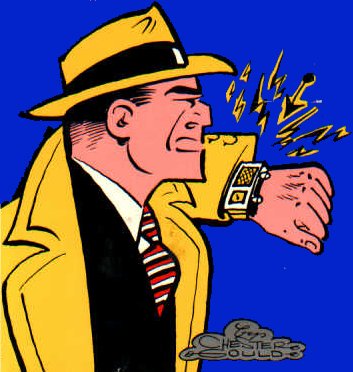
Every Sunday Dad would get the newspaper and I'd make a beeline for the funnies so I could read the exploits of that great crime fighter, Dick Tracy, who fought unusual villans in 3 colors.


In elementary school when we learned to read we read about Dick. We also read about Jane and Sally and their little kitty Puff. I forget the dogs name. Oh yeah Spot. Dick had a great life and I was envious.


There were plenty of Dicks was on TV and in the movies. . There was Dick Powell and Dick Patten.


There was Dick Van Dyke with his pretty bubble haired TV wife. Dick Van Dyke was extremely popular.


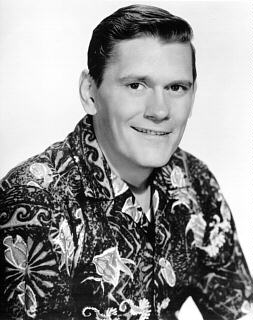
Dick York and Dick Sargent shared the same TV wife.. Dick Shawn was at one time a well known actor. Dickie Moore was in the Little Rascals. Dick Beals was a voice over talent and his voice was well known as Speedy Alka-seltzer and Gumby.


Dick Gregory was once a fat, Black comedian before he slimmed down and became a slender African American activist. But Dick Gregory is still a Dick.


Herman Melville was required reading as we moved on through school. We all read Moby Dick.


Shakespeare wrote two plays about Dick.


Dick Hyman is a wonderful singer and pianist. He’s also somewhat of a paradox if you put some thought to it.

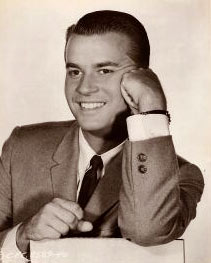
Every Saturday afternoon we would turn on Dick Clark to check out Bandstand. Are you getting the picture by now?.


Dicks were everywhere and Dick was popular. Women liked Dick. Men liked Dick. Everyone liked Dick.


There was even a shoe repair guy in my town named Dick Weiner. You have to have large hangy-down things to live with a nomicker like that.


Did you know that Michael Savage, the loudmouth radio guy’s given name is Michael Weiner. He calls his show
The Savage Nation.


I wonder how many people would listen to a radio show called The Weiner Nation? But I digress


I’m not sure what caused the dislike of Dick, but I have my opinion.

Now I know what you are thinking this rejection of Dick in today’s culture is because for years Dick had another connotation and I know that you are aware of where I am going with this.


In bygone days, detectives were nicknamed Dicks. I love old movies. In some of my favorites, Humphrey Bogart played Phillip Marlowe. Whenever Marlowe was asked his occupation he would answer unabashedly, “I’m a private Dick.” Law abiding folks liked Dicks and criminals didn’t like having Dicks poking in their affairs.


And of course Dick also had another meaning. Railroads were at one time the most popular and economical means of transportation by paying customers and non-paying customers. The non-payers were called Hobos or freeloaders. They were actually bums. The railroad personal hired to make certain that the boxcars were hobo-free were known by said hobos as Railroad Dicks. There were certain elements of society that just didn’t like Dick. I for one do not care what a bum thinks.

But here is my theory. Dick grew increasingly minor in our society, that is insignificant because of the 37th President of the United States, Dick Nixon a.k.a. Tricky Dicky. Think about it. Nobody wanted to be a Dick anymore after Dick Nixon. All the Dicks are now Richards, Rich’s or Richies. There are few Dicks left.


One of my favorite guitar players is Dick Dale. Dick Dale is a proud Dick. He calls his fans, Dick-heads. I like Dick Dale.


I have a relative named Dick. His mother calls him Dick. His big sister calls him Dick. His wife calls him Rich. She can't bring herself to the fact that she married a Dick. He calls himself Richard. Richard's a great guy. But I say if you are a Dick than stick up for yourself and be a Dick.

Friday, January 05, 2007

Big Creek

At Christmas dinner we were talking about old childhood friends and my brother Tim mentioned Big Creek. I hadn’t thought about Big Creek in years. It brought back a lot of great memories.


Across the street from my childhood home and tucked behind the homes that lined the southern portion of my block was a wonderful woods. I spent many of my childhood days roaming through that woods. It wound around the perimeter of my neighborhood and stretched for several miles in a southerly direction. There also was a place where it bent and headed northward. It practically stretched from one graveyard in one city to another one about five miles away and ran past a golf course.

The woods did not have a name. However tucked within was Big Creek. It was a tributary of the Licking River that supported all sorts of wonderful woodland life that a boy could pick up and enjoy. As it trickled towards the woods near my home the creek became much smaller. And of course the smaller portion was called Little Creek. Between the two was a slight waterfall. It was given the name Clay Falls.


Within the creek's questionable waters dwelt crayfish, frogs, salamanders, water skeeter, snakes and assorted creepy-crawlies that hid under damp rocks. These woods were home to deer, fox, squirrel, chipmunks, rabbits and racoon. All were vying for safe haven to hide from the likes of us wild little screaming kids that would run through the woods playing Indian or Tarzan.


The tree were put there for climbing and hiding from your friends. You could carve your initials or pictures in the bark. The best fun was swinging on the vines. There were never a shortage of vines of one type or another that were tangled in the trees. They were plenty strong to hold the weight of an 80 pound Tarzan or an even tinier Jane. Some of the vines were strategically placed over a portion of the creek, so that you could swing across to the other side.

When I was 8 or 9 years old I knew no fear. At 57 year, you couldn’t get me up on a roof now, but as a boy I would scale tree tops with no thought of falling. I could swing on vines with no care of the limb breaking or giving out. I would pick up all manner of wee, nasty beasts with the recklessness of the Crocodile Hunter. As a matter of fact we did have a pet crocodile, but I will save that for a later story.

There was all manner of wonderful junk that folks had been kind enough to dump in the woods just for the benefit of the neighborhood’s boys. What did we know about enviromental impact. It was treasure. We could find an old rusted coffee can that was perfect for holding crayfish or as we called them crawdads. Mostly these invertebrates were the little ones that wouldn’t hurt too much if they pinched you. Occasionally you would find a big one the size of a small lobster. These invertebrates were filthy. What did I care. I didn’t think about disease. We snatched them out of their habitat, took them home and set them on a shelf in our room until they began to stink too bad. At which time they mysteriously disappeared. The same held true for frogs, toads and snakes. We dragged them home to Mom to display our bounty along with some of the vile creek water in which they dwelt.
It appeared that Big Creek at one time held some sort of reservoir. Perhaps it was left over from some long forgotten WPA project. There was this large circular concrete structure that had been filled in with gravel. One side of it appeared to have sustained some damage.

As kids we thought perhaps it was bombed by enemy aircraft. Although I don’t think there were actually any air wars in the northern section of Kentucky. Although the Air Force Base in Dayton, Ohio regularly flew overhead making sonic booms for their training excercises. After all, these were the Cold War years.

Not too far away was a rectangular cement structure that may have been some sort of holding tank.

I recall my good friend Danny Koenig cut his foot up pretty badly on some broken glass that was in the bottom of this tank. Why he was barefoot and walking through the nasty sludge, I don’t recall. He was quite concerned that he would contact typhoid fever. Danny ran home. The next time we spoke he had received a few stitches, some penicillin and a good bawling out by his folks.

Despite the punishment, Danny was grateful that he never contracted typhus. So was I. It would have been quite difficult to explain to my folks the origin of my best friend, Typhoid Danny.

Mostly it was us boys that would run amuck through the vines and trees and along the trails, but there were a few girls that were tomboys. And though the girls enjoyed the woods, they could not engage in impromptu pissing contests. This was the sport of men...uh or boys.


As we were modest around the ladies, the pissing contests mostly were held as designated stag events. One boy would announce that he had to take a leak and this was the queue for us to unzip and see what sort of stream you could produce. We never aimed at a target. The object was to be the guy that had the highest arc and the longest distance.

Without a doubt, the Roberts brothers, Mike and Dave, held the undefeated title of world class pissers. I swear they could produce an arc about 10 or 12 feet high and piss a distance of at least 20 feet. These guys had the strongest bladders ever.

Occasionally I watch the World's Strongest Man Competition on ESPN 2. For the life of me I don't know why they don't include a pissing competition? Ask any man and he will tell you that pissing outdoors is one of life’s great simple pleasures.

Tennie Komar and Debbie Tallon were tomboys that lived nearby. Tennie was my best buddy for a number of years and we would hang out in the woods. Mostly we walked and talked and made funny noises.


Tennie's Dad had built this wonderful treehouse between four or five elm trees that were in a grove behind their house. It was just a platform made from scrap lumber. He had put a railing around it and a ladder to climb up in it. Gosh that was a great place for kids to hang out, talk and dream.

Tennie’s dad was sort of a quiet introspective guy and it was not odd to see him walking through the woods. Even at the young age I attributed his quite demeanor to Tennie's mother. If you look under type A personalities in the dictionary you will there will be a picture of Mrs. Komar.

There was a time when our friend Jimmy Perry was visiting. He swang out on one of the best Tarzan vines over a ravine. Jimmy wasn't a large kid, but he was solid. The vine snapped and he went tumbling into the ravine and fractured his leg. Mr. Komar was called for and he carried Jimmy all the way back to his home and called for an ambulance. We were somewhat more cautious about the vines after this episode.

I suppose that I explored those woods as well as Daniel Boone explored the Cumberland Valley in the Southern part of the state. I knew every twist and turn of the creek, where every trail began and ended and how to find my way back home. It was in a day when the sky was so much clearer and the air was sweeter. These days I find myself suffering from poison ivy just by looking at the miserable weed. I have to shower after mowing the yard. But as a kid I was totally immune.

The biggest danger of Big Creek wasn't the wildlife, Tarzan vines, typhoid or weed poisoning. It was bullies. Around the corner from my house and halfway down that street were two guys named Rick that had a reputation for being mean to younger kids and me in particular.


As a young fellow I admit that I had a problem with my temper, but essentially I was a pacificist. I didn't care much for hurting other people. I was a friendly kid and I hoped that others would have the same attitude. It was a damned shame the Ricks didn't feel the same way. Occasionally they enjoyed pelting me with rocks or their fists. For the life of me, I don't know what I ever did to those guys.

One thing that helped me to allude The Ricks was the lesson that I learned from reading of a great childhood tome, Smokey The Bear. When danger was present, climb a tree.


I made great use of this strategy many times. It is amazing that people only see things at eye level. As long as you are very quiet you can see all manner of happenings from 20 feet up on a tree limb, even if you are not camoflauged. No one looks up.

I decided after our Christmas dinner to check the woods and Big Creek out via Google Earth. The airplane view that appeared on my computer screen showed how much the landscape had changed.
Today at the most distal southern end of Big Creek is I-275 and it's egress and exit in the area of Wilder Kentucky. Along the Western perimeter in Wilder is a new highway that leads to the AA Highway. Along this new road many businesses and industries have sprung up that did not exist in the 1960's. On the right side of that road behind the business is the Licking River.

I haven't walked through the woods but it's doubtful there is any longer a creek since the road and developements have long since blocked up the tributary. Along the Northern perimeter the Highland Country Club golf course has expanded and scores of condominiums have sprung up along Moock Road.

Big creek, the wild creatures, avoidance of disease, the pissing contests, tomboys and bullies all served as a microcosm of life as an adult. I won't subject you to the analogies and allusions. I leave them to your fertile imagination.

But you know there is still a good sized patch of woods across from Mom's home on the Eastern side of the creek. Although it does not cover the expanse that it did when I was when I was a child, it is a remnant of the way things used to be.


Friday, December 22, 2006

The 12 Days Of Christmas

On the first day of Christmas, my true love gave to me
A partridge in a pear tree


On the second day of Christmas, my true love gave to me
Two turtle doves,
And a partridge in a pear tree


...and so forth. The last verse is:


On the twelfth day of Christmas, my true love gave to me
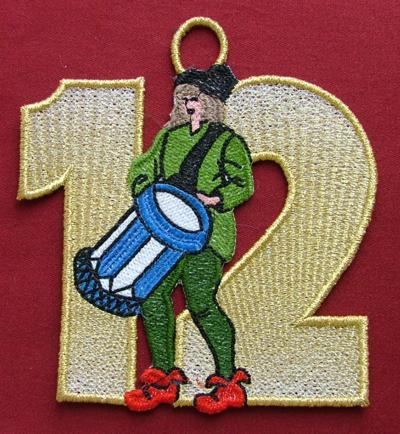
Twelve Drummers drumming
Eleven Pipers piping
Ten Lords a-leaping
Nine Ladies dancing
Eight maids a-milking
Seven swans a-swimming
Six geese a-laying
Five golden (sometimes gold) rings
Four calling (or colly) birds
Three french hens
Two turtle doves and
And a partridge in a pear tree


The Twelve Days of Christmas is a children's rhyme that was originally published in a book called Mirth without Mischief in London around 1780. It was originally a memory and forfeit g
ame and it was played by gathering a circle of players and each person took it in turns to say the first line of the rhyme. When it is the first player's turn again he says the second line of the verse and so on.


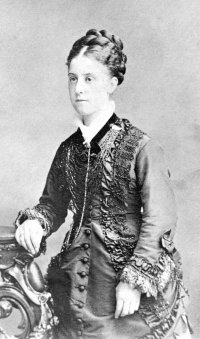
100 years later the game and rhyme were adopted by Lady Alice Gomme as a rhyme that "the whole family could have fun singing every twelfth night before Christmas before eating mince pies and
twelfth cake".


These are the twelve days beginning on night of the 25th of December and ending on January 5th, the eve of the Feast of The Epiphany. In the Middle Ages this period was one of continuous feasting and merrymaking, which climaxed on Twelfth Night, the traditional end of the Christmas season.


During the twelve days of Christmas, traditional roles were often relaxed, masters waited on their servants, men were allowed to dress as women, and women as men. Often a Lord of Misrule was chosen to lead the Christmas revels. Some of these traditions were adapted from older, pagan customs, including the Roman Saturnalia.


Some also have an echo in modern day pantomime where traditionally authority is mocked and the principal male lead is played by a woman, while the leading older female character, or 'Dame' is is played by a man. Some people give gifts, feast and otherwise celebrate on each of the twelve days rather than just on one day at Christmas.


Some Christians assign symbolism to the gifts in the song. One of the most common versions of these assigned meanings is:

• The 'partridge in a pear tree' means there is only one God and is also symbolic of Jesus (see Luke 13:34).
• The 'two turtle doves' are the Old and New Testaments.
• The 'three French hens' are the three Persons of the holy Trinity or the three virtues: faith, hope, and love, though according to Ace Collins' book "Stories of the Best Loved Christmas Songs", they represent the expensive gifts of the Wise Men: gold, frankincense, and myrrh.
• The 'four calling birds' are the Evangelists: Matthew, Mark, Luke, and John; or their Gospels. Which makes sense because they are "calling" out the story.
• 'Five gold rings' are the first five books of the Bible, or the Pentateuch.
• 'Six geese a-laying' refer to the six days of the Creation.
• 'Seven swans a-swimming' are the seven sacraments and the seven gifts of the Holy Spirit.
• 'Eight maids a-milking' are the eight Beatitudes.
• 'Nine ladies dancing' are the nine fruits of the Holy Spirit.
• 'Ten lords a-leaping' are the Ten Commandments.
• 'Eleven pipers piping' are the eleven faithful Apostles.
• 'Twelve drummers drumming' are the twelve doctrines in the Apostles' Creed.


This interpretation is usually taught with a story that British Catholics, suffering persecution in the 16th century, wrote the song with these hidden meanings. Although some sources, such as Snopes, disagree on this point. They point out that under the rule of Henry Vlll (1509-1547) ties were broken with the Catholic Church in Rome and the Anglican Church was established. After Elizabeth l established rule the “old worship” and open practice of the Catholic Church was forbidden following the Act of Uniformity. This was until Parliament passed the Catholic Emancipation Act in 1829. However it is not accurate to say that, without exception, anyone caught practicing Catholicism or possessing related material at any time during this 270 year period was immediately imprisioned or executed. The state’s tolerance of Catholicism waxed and waned with political exigencies of the times.


We can say with certainty that the song would have served as a pedagogical tool, however, some sources say that it was merely a "memory and forfeits game" originally played by children.


Sometimes "sent to me" is used instead of "gave to me"; also "five golden rings" is sometimes "five gold rings". Some argue that "gold" is correct and that "golden" is not. But because "gold" requires stretching into two syllables, the word "golden" seems to fit better. Additionally, some interpreters of the song argue that the five rings refer to coloring around the neck of birds such as pheasants, not jewelry.

The line four calling birds is an Americanization of the traditional English wording four colly birds, and in some places, such as Australia, the variation calling is supplanting the original. Colly is a dialect word meaning black and refers to the European blackbird Turdus merula.

The line four calling birds in some versions is four coiled birds. One version even had four mockingbirds.

The line nine ladies dancing in some versions is nine ladies waiting. The ladies themselves are also called dames a-dancing.

In Scotland early in the nineteenth century the song was started with:
"The King sent his lady on the first Yule day,A popingo-aye (parrot) Wha learns my carol and carries it away?"

I hope you have a Merry Christmas.

Wednesday, December 20, 2006

Homer Ledford - A Kentucky Treasure Passes

Legendary bluegrass musician and instrument maker Homer Ledford, whose work is displayed at the Smithsonian Institution, died Monday afternoon.

Mr. Ledford, of Winchester, was 79.

"He'd been sick real bad for a month or so," said Vernell Carpenter, wife of Rollie Carpenter, a member of the group Homer Ledford and the Cabin Creek Band.

The band had been performing since 1976.

"He hadn't played with the band all year," she said. "He'd been real sick and couldn't walk or anything."

Vernell Carpenter said she and Rollie Carpenter received word of Mr. Ledford's death yesterday from another member of the band, L.C. Johnson. Other band members are Marvin E. Carroll and Pamela Case.


Mr. Ledford was born Sept. 26, 1927, in the Tennessee mountains.

At an early age back in Tennessee Mr. Ledford started making musical instruments, according to his band's Web site.

At 18, he was given a scholarship to attend John C. Campbell Folk School in Brasstown, N.C. He later attended Berea College, but transferred and graduated from what is now Eastern Kentucky University in 1954.

Mr. Ledford worked as a high school industrial arts teacher in Jefferson and Clark counties and became a full-time instrument maker.

He completed an estimated 5,776 dulcimers, 475 banjos, 26 mandolins, 26 guitars, 18 ukuleles, and four violins, among other instruments, the Web site said. He is also the author of a book on Kentucky life that featured his stories and poems called "See Ya' Further Up The Creek."

Mr. Ledford has samples of his craft in the Smithsonian Institution, including a fretless banjo, an Appalachian dulcimer, and a dulcitar, an instrument of his own invention, which he patented.

He was honored in Winchester in 1986 when the Homer Ledford Bluegrass Festival was named after him.

He was also one of the original inductees in the Kentucky Stars. A sidewalk plaque honoring him is in front of the Downtown Arts Center on Main Street in Lexington.

In 2005, Mr. Ledford helped restore an 1850 Martin parlor guitar -- played by Henry Clay's granddaughter, Anne Clay McDowell -- for Ashland, The Henry Clay Estate.

"Homer was a delight to work with, and until I showed up on his doorstep, he had only worked on one other Martin guitar dating to the 19th century," Ann Hagan-Michel, executive director of the estate, said at that time. "He's done a wonderful job, and the guitar is playing nicely now."

Michael Jonathan, the host of Wood Songs Old Time Radio Hour, calls his friend Homer, "a sweet, gentle and humble man. Homer is a great bluegrass musician, a brilliant luthier.

He is survived by his wife, Colista. The two met as students at Berea College in the late 1940s. They were married more than 50 years.

My home state of Kentucky has lost a great treasure.

Excerpts from the obituary written by

Shawntaye Hopkins of the LEXINGTON HERALD-LEADER